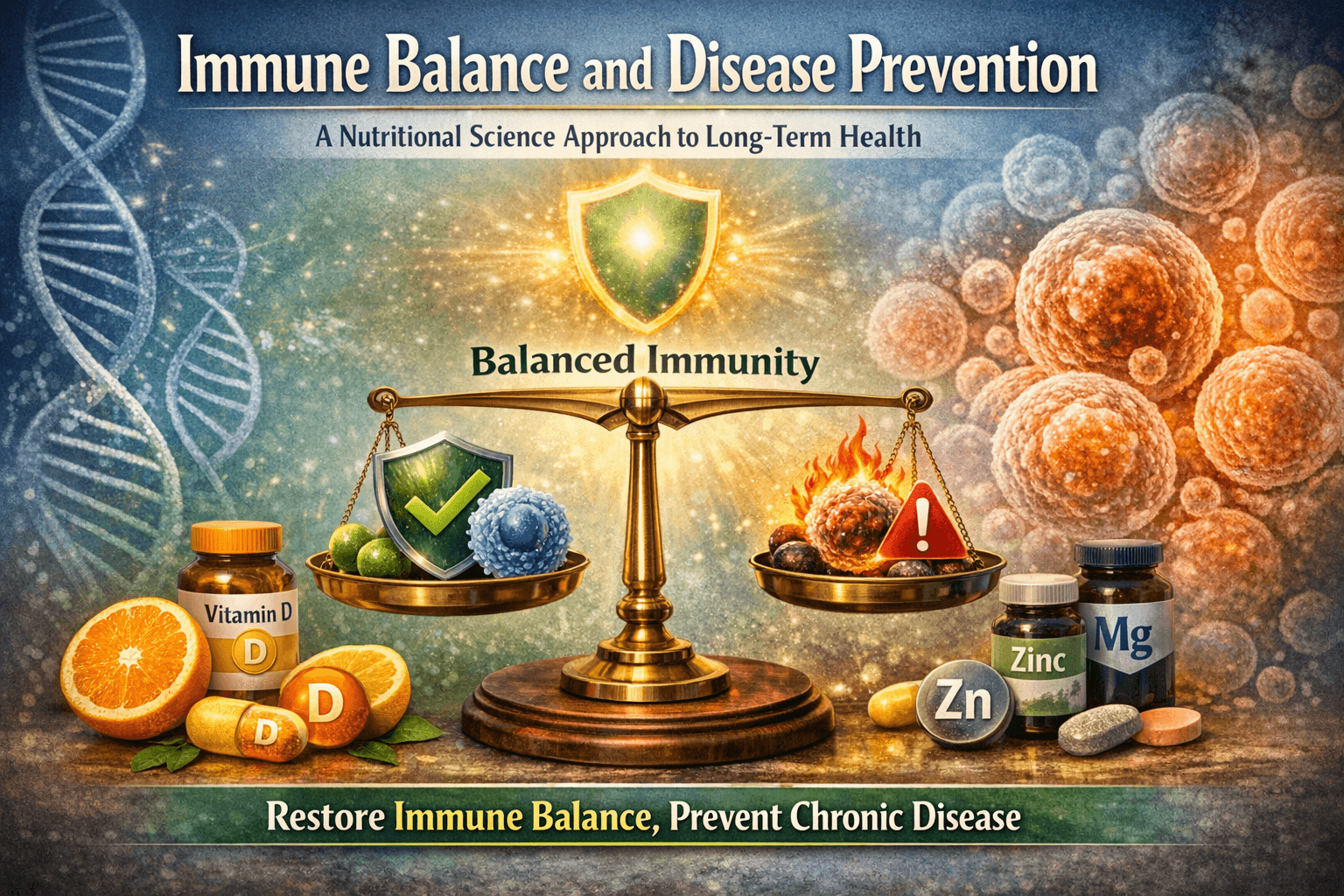
Immune Balance and Disease Prevention
A Nutritional Science Approach to Long-Term Health
Most people think disease prevention means avoiding germs.
But from a nutritional science perspective, prevention is something deeper:
Disease risk rises when the immune system loses balance.
Disease risk falls when the immune system regains regulation.
Immune balance is not about having a “strong” immune system that attacks everything.
It is about having an immune system that can:
- recognize threats accurately
- respond appropriately
- Stop inflammation on time
- repair tissue completely
- return to stability after stress
This article explains how immune balance prevents disease—and how nutritional science (especially vitamins and minerals) is the most practical path to building that balance.
What Is Immune Balance?
Immune balance means the immune system is neither:
- underactive (weak immunity), nor
- overactive (chronic inflammation)
When immunity is underactive:
- frequent infections
- slow healing
- fatigue
- increased disease vulnerability
When immunity is overactive:
- chronic inflammation
- allergy-like sensitivity
- autoimmune tendencies
- tissue damage over time
Balanced immunity is the middle path:
strong enough to defend, calm enough to heal.
Why Immune Imbalance Leads to Chronic Disease
Chronic diseases rarely begin suddenly.
They develop when an immune imbalance becomes persistent.
Immune imbalance creates:
- unresolved inflammation
- oxidative stress overload
- poor tissue repair
- disrupted metabolic signaling
Over time, this can contribute to:
- metabolic disorders
- digestive inflammation
- joint and skin conditions
- vascular damage
- degenerative changes
So prevention is not only about stopping disease – it is about restoring immune balance early.
The Nutritional Science Behind Immune Balance
Immune cells are nutrient-dependent. They need micronutrients for:
- immune signaling (cell communication)
- enzyme function (immune reactions)
- antioxidant defense (stress control)
- inflammation resolution (healing completion)
- immune memory (long-term resilience)
Without these nutrients, immunity becomes unstable.
This is why nutritional science views vitamins and minerals as immune regulators, not just supplements.
The “Triad” of Immune Balance: Nutrition + Digestion + Detox
Immune balance does not depend only on what you consume.
It depends on what your body can absorb, use, and clear.
1) Nutrition (Input)
Provides vitamins and minerals.
2) Digestion (Absorption)
Determines whether nutrients reach cells.
3) Detoxification (Clearance)
Prevents toxins from confusing immune signaling.
When any part of this triad fails, immune imbalance grows.
Key Vitamins That Support Immune Balance
Vitamin D – The Immune Regulator
Vitamin D helps the immune system respond appropriately—without overreacting.
Low Vitamin D is commonly linked to:
- chronic inflammation
- immune instability
- frequent illness patterns
Vitamin A – Barrier & Immune Recognition
Vitamin A supports:
- mucosal defenses (gut, lungs)
- immune recognition accuracy
- healthy tissue repair
When barriers weaken, the immune system remains in constant reaction mode.
Vitamin C – Antioxidant and Recovery Support
Vitamin C supports:
- oxidative stress control
- immune cell function
- tissue repair
It also helps prevent long-lasting inflammation after illness.
B-Complex – Energy and Immune Stability
B-vitamins fuel immune cell metabolism and repair systems.
Without them:
- immune responses become sluggish
- fatigue increases
- recovery becomes unstable
Essential Minerals That Stabilize Immunity
Zinc – Immune Communication Mineral
Zinc is central to:
- immune signaling
- wound healing
- balanced immune reactions
Zinc deficiency often appears as:
- recurring infections
- slow recovery
- low immune clarity
Magnesium – Metabolic and Stress Stabilizer
Magnesium supports enzyme functions needed for:
- inflammation control
- energy stability
- stress tolerance
Magnesium depletion is common in modern life due to stress and a poor diet.
Selenium and Copper – Antioxidant Precision Minerals
These minerals support antioxidant enzymes that protect immune cells from oxidative stress.
Balance is critical—more is not always better.
How Nutritional Deficiencies Increase Disease Risk
When vitamins and minerals are low:
- Immune responses become inaccurate
- Inflammation stays prolonged
- Tissue repair is incomplete
- Infections become frequent
- chronic symptoms begin to develop
In other words:
Deficiency creates immune instability.
Immune instability creates disease risk.
Prevention begins with correcting the deficiency early.
Why Food Alone Often Fails to Maintain Immune Balance
In ideal conditions, food is enough.
But today, many people face:
- processed diets
- nutrient-depleted food sources
- poor digestion due to stress
- chronic inflammation
- Irregular meal timing
- sleep disruption
Even if intake is adequate, absorption may not be.
That is why many people benefit from precision nutrition through well-formulated supplements.
Supplements as a Nutritional Science Tool for Prevention
Supplements matter for disease prevention when they:
- fill real micronutrient gaps
- support immune regulation rather than stimulation
- Combine nutrients synergistically
- are safe for long-term use
This is why Dantura Botanics positions supplements as cellular nutrition tools—supporting immune balance through vitamins, minerals, and cofactors.
Prevention is not about taking “more.”
It’s about taking what the immune system truly needs.
Lifestyle Practices That Enhance Nutritional Immune Balance
Nutrients work best when the body’s daily rhythm supports immunity.
Key habits:
- consistent sleep schedule
- hydration and regular bowel movement
- meal timing consistency
- avoiding chronic overeating and late-night heavy meals
- moderate physical activity (improves immune circulation)
These habits amplify the impact of nutritional correction.
What Immune Balance Feels Like (Practical Markers)
When immune balance improves, many people notice:
- fewer infections per year
- faster recovery from colds
- less fatigue fluctuation
- better digestion and sleep
- fewer inflammatory flare-ups (skin, joints, gut)
- improved stress tolerance
These are prevention markers – often appearing before lab values change.
Final Takeaway
Disease prevention is not only about avoiding germs or doing yearly checkups.
It is about keeping the immune system balanced—strong enough to defend, calm enough to heal.
And the most practical, science-backed way to support immune balance is:
Nutritional correction at the cellular level – especially vitamins and minerals—is supported by digestion and detox stability.
That is the nutritional science approach to prevention—and the foundation of immune-based wellness.