Understanding Bioavailability in Supplement Science
A Natural Immunotherapy Perspective on Smarter Nutrient Absorption
When people think about nutrition, they usually focus on what they are taking. Vitamin C. Zinc. Magnesium. Iron.
But in supplement science, a more important question exists:
How much of it actually gets absorbed and used by the body?

That is where the concept of bioavailability becomes critical.
For brands like Dantura Botanics, and from a Natural Immunotherapy (NIT) perspective, bioavailability is not just a scientific term — it is the foundation of real cellular improvement.
What Is Bioavailability?
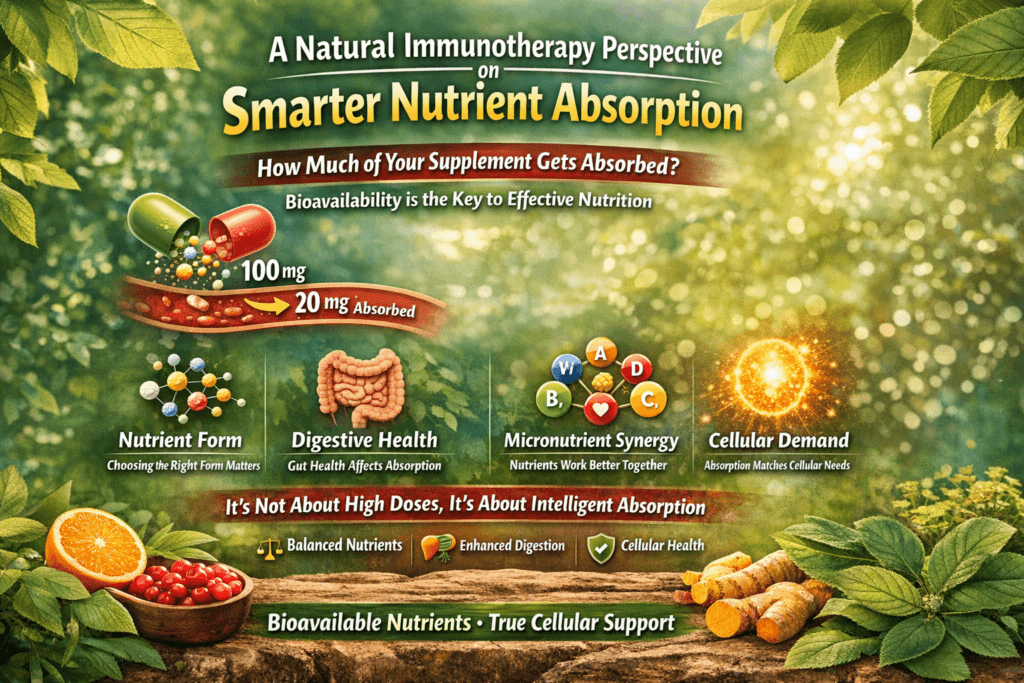
Bioavailability refers to the percentage of a nutrient that enters the bloodstream and becomes available for cellular use after ingestion.
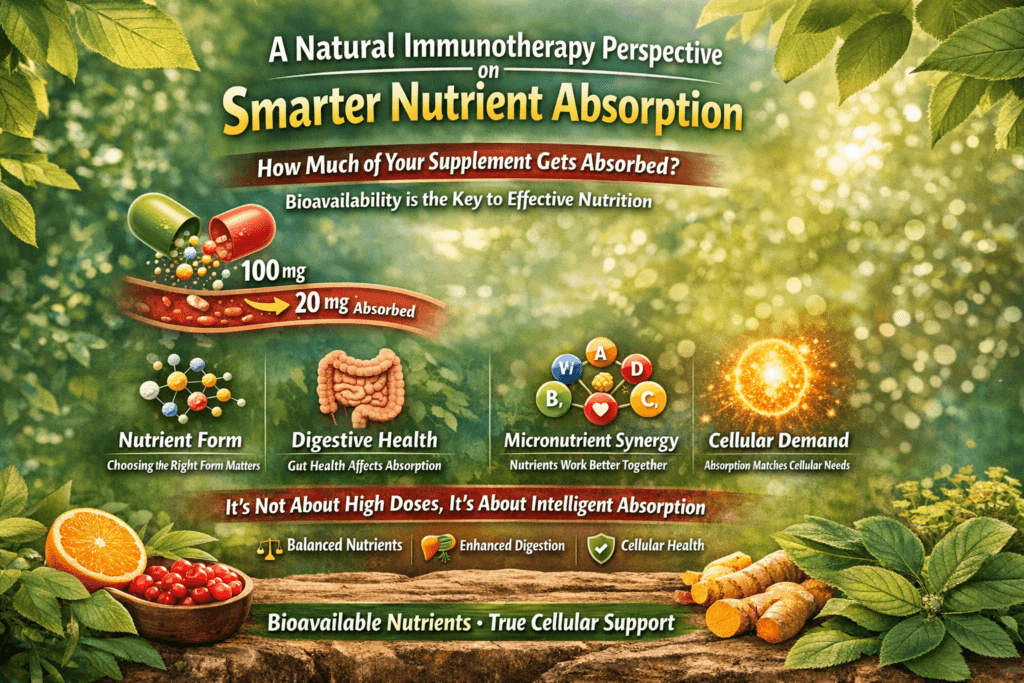
If you consume 100 mg of a nutrient but only 20 mg reaches circulation in active form, the bioavailability is 20%.
This means:
- Not all nutrients are absorbed equally
- Not all forms of the same nutrient behave the same way
- Dosage alone does not determine effectiveness
Your body does not respond to labels — it responds to what it can absorb and utilize.
Why Bioavailability Matters More Than Dosage
Many people assume:
“Higher dose means better results.”
But the body operates on precision, not excess.
Excess nutrients that are poorly absorbed may:
- Irritate digestion
- Create metabolic burden
- Disrupt natural balance
- Be excreted unused
In Natural Immunotherapy, we focus on physiological ratios and intelligent absorption, not megadoses.
The goal is not to flood the system.
The goal is to support it.
Factors That Influence Bioavailability
1️⃣ Nutrient Form
Different chemical forms of the same nutrient have different absorption rates.
For example:
- Mineral salts may absorb differently than chelated forms
- Fat-soluble nutrients require dietary fat
- Water-soluble nutrients need stable digestive conditions
Choosing the correct form is critical in formulation science.
2️⃣ Digestive Health
Absorption begins in the gut.
If the intestinal lining is inflamed, weak, or overloaded:
- Microvilli efficiency decreases
- Enzyme activity reduces
- Nutrient transport slows
This is why in NIT philosophy, improving digestion and liver function is essential before expecting systemic improvement.
3️⃣ Micronutrient Synergy
Nutrients rarely work alone.
Examples:
- Iron requires Vitamin C for better absorption
- Magnesium interacts with Vitamin D
- B-vitamins function as a network
When nutrients are balanced correctly, bioavailability improves naturally.
This is the principle behind precision micronutrient synergy used in Dantura Botanics formulations.
4️⃣ Cellular Demand
The body absorbs better when there is genuine need.
Cells under deficiency express stronger transport signals.
When balance is restored, absorption self-regulates.
This intelligent mechanism reflects what we call cellular intelligence in Natural Immunotherapy.
Bioavailability and Natural Immunotherapy
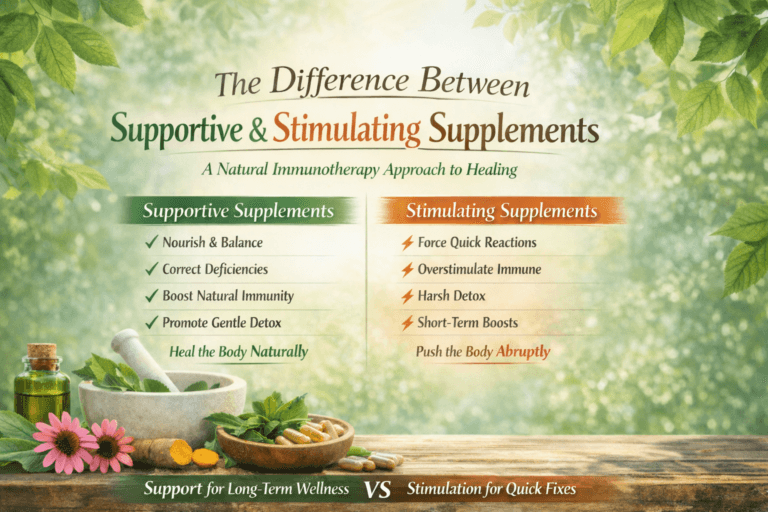
Natural Immunotherapy does not aim to stimulate the immune system aggressively.
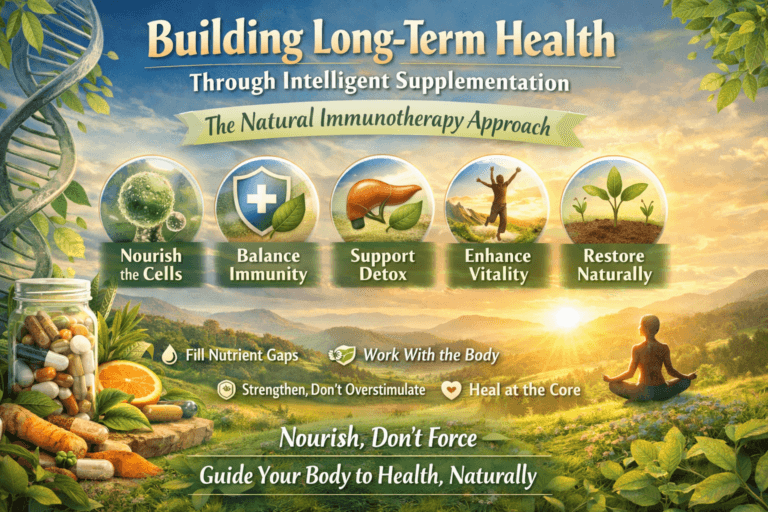
Instead, it focuses on:
✔ Correcting deficiencies
✔ Supporting detox pathways
✔ Improving metabolic clarity
✔ Enhancing nutrient signaling
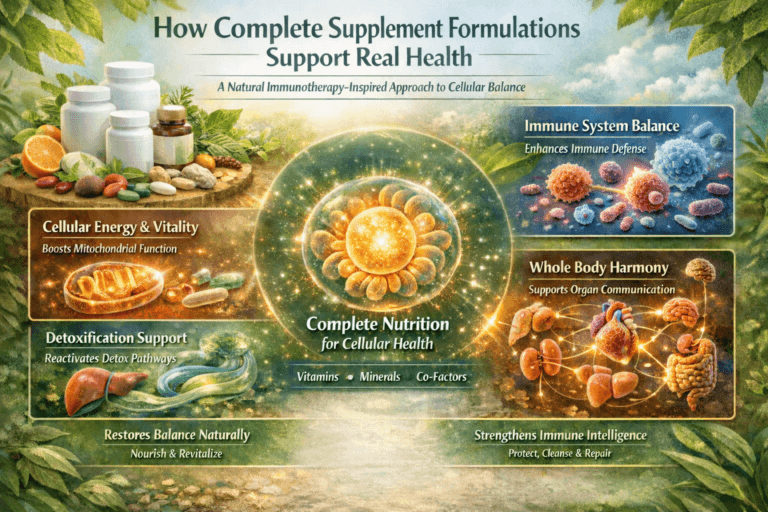
When nutrients are bioavailable, they participate in:
- Immune cell communication
- Red blood cell formation
- Enzyme activation
- Protein metabolism regulation
- Detoxification cycles
Bioavailability determines whether supplementation becomes cellular transformation or just expensive excretion.
Signs of Poor Bioavailability
Sometimes people say:
- “I’ve been taking nutrients for months but feel no difference.”
- “My lab values aren’t improving.”
- “Digestion feels heavy.”
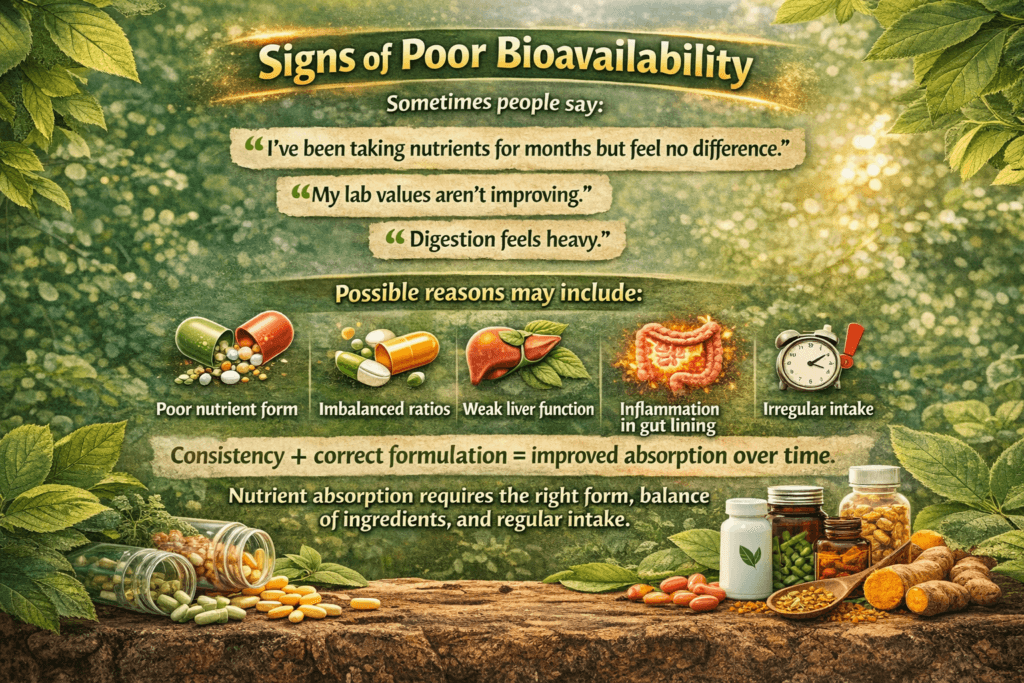
Possible reasons may include:
- Poor nutrient form
- Imbalanced ratios
- Weak liver function
- Inflammation in gut lining
- Irregular intake
Consistency + correct formulation = improved absorption over time.
The Dantura Approach to Smarter Absorption
At Dantura Botanics, formulations are designed around:
- Balanced micronutrient ratios
- Synergistic combinations
- Digestive compatibility
- Cellular-level utility
Instead of focusing only on high-dose marketing, the emphasis remains on:
Practical bioavailability and long-term metabolic harmony.
This aligns with the broader vision of Save Medha Foundation and the Natural Immunotherapy ecosystem — building health by restoring terrain, not fighting symptoms.
The Long-Term Impact of Good Bioavailability
When nutrients are properly absorbed:
✔ Energy becomes stable
✔ Immune clarity improves
✔ Detox pathways strengthen
✔ Tissue repair accelerates
✔ Metabolic balance returns
Over time, this creates resilience.
And resilience creates long-term health.
Final Thought
Bioavailability is the bridge between consumption and transformation.
It is not about what you swallow.
It is about what your cells can actually use.
In supplement science — and especially in Natural Immunotherapy — smarter absorption means smarter healing.
FAQs
What does bioavailability mean in nutritional science?
Bioavailability refers to the percentage of a nutrient that is absorbed into the bloodstream and becomes available for cellular use. It determines how effectively the body can utilize what is consumed.
Why is bioavailability important in Natural Immunotherapy?
Natural Immunotherapy focuses on restoring balance rather than overstimulating the immune system. For nutrients to support immune communication, detox pathways, and metabolic clarity, they must first be properly absorbed. Without good bioavailability, even high-quality nutrients may not deliver expected benefits.
Does a higher dosage guarantee better results?
No. Higher dosage does not automatically mean higher effectiveness. The body responds to what it can absorb and utilize. Balanced formulation and proper absorption matter more than megadoses.
How do bioavailable nutrients support immune function?
When nutrients are bioavailable, they actively participate in immune cell communication, red blood cell formation, enzyme activation, protein metabolism regulation, and detoxification cycles — all of which contribute to balanced immune response.
What factors affect nutrient bioavailability?
Bioavailability depends on several factors including nutrient form, digestive health, liver function, micronutrient synergy, metabolic demand, and consistency of intake.