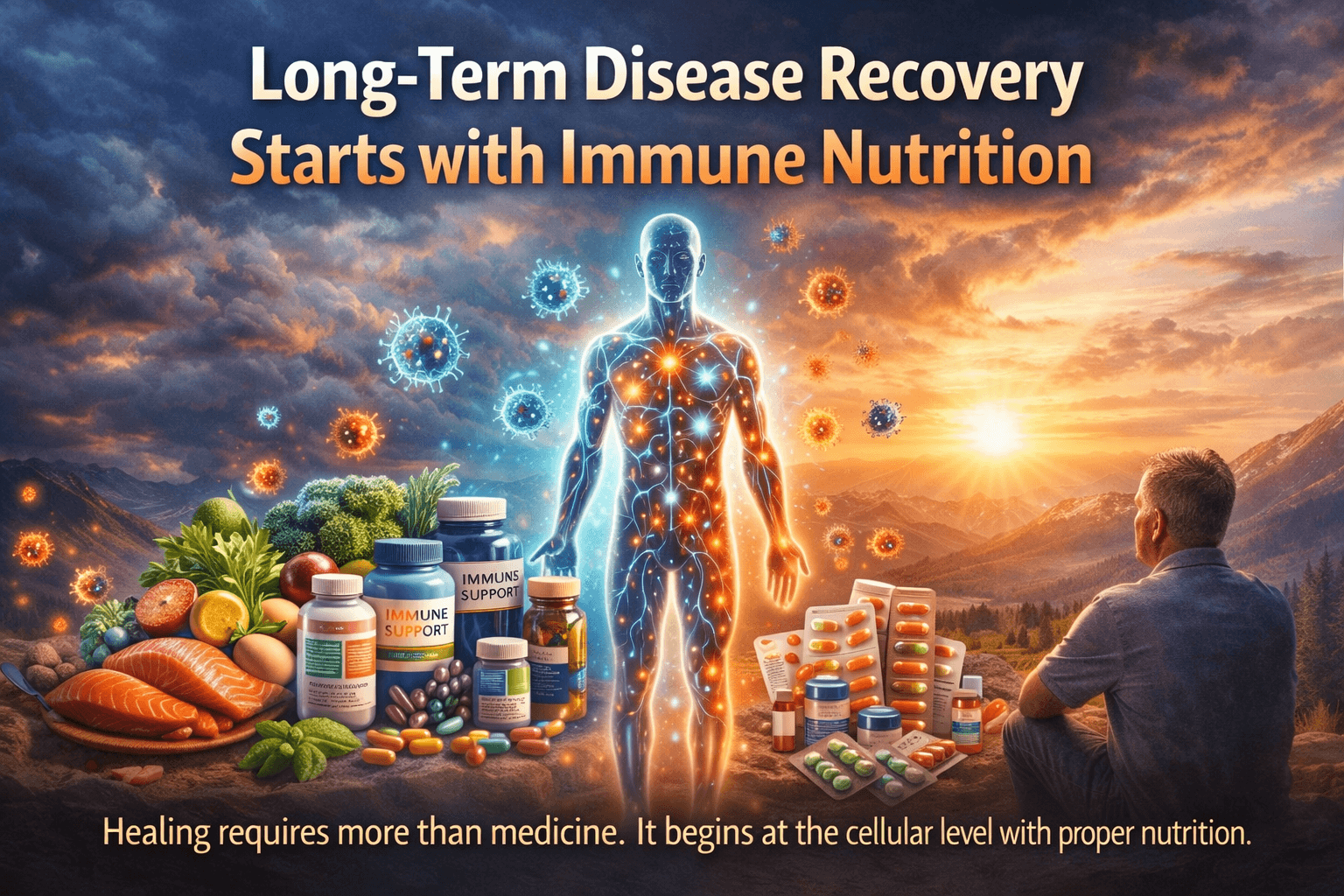
Long-Term Disease Recovery Starts with Immune Nutrition
Why Healing Lasts Only When the Immune System Is Properly Nourished
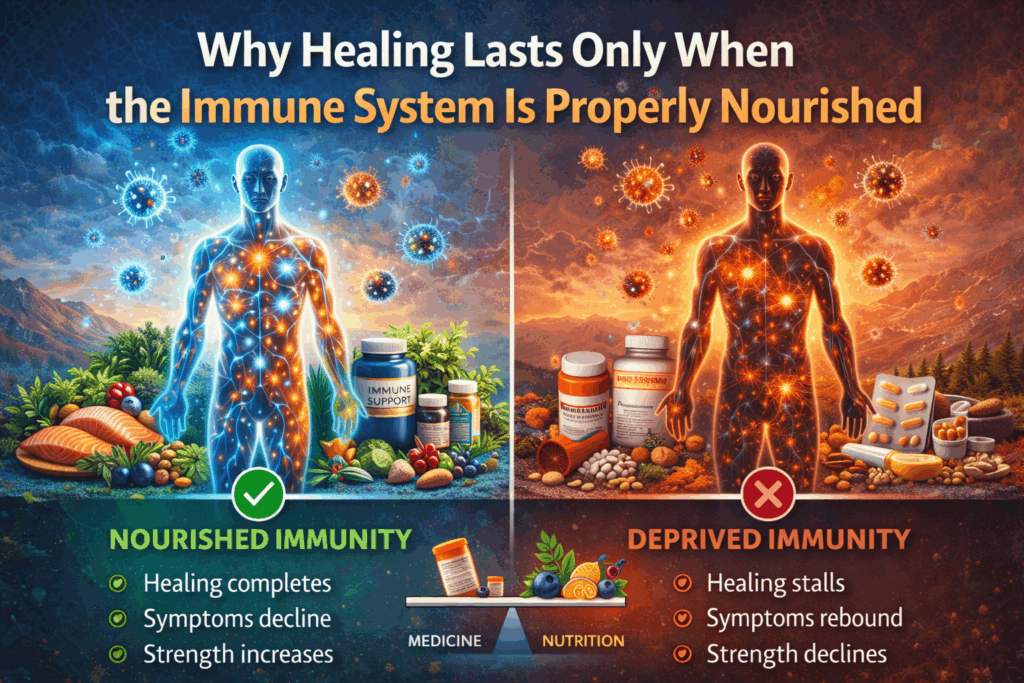
Many people recover temporarily from disease—only to relapse months or years later.
Symptoms reduce. Reports improve.
But full strength never returns.
This happens because treatment controls disease, while nutrition determines recovery.
From a biological perspective, long-term recovery does not begin with medicine.
It begins with immune nutrition at the cellular level.
Recovery vs Survival: A Critical Difference
Survival means:
- Symptoms are controlled
- Disease markers are managed
- Crises are avoided
Recovery means:
- Immune balance is restored
- Inflammation resolves completely
- tissue repair stabilizes
- energy and resilience return
- Relapse risk reduces
Most chronic diseases fail to resolve because the body remains in survival mode, not recovery mode.
The switch from survival to recovery is controlled by immune nutrition.
Why the Immune System Determines Long-Term Recovery
The immune system is responsible for:
- identifying damaged or abnormal cells
- clearing inflammation after injury or illness
- coordinating tissue repair
- maintaining internal balance
Medicines can suppress symptoms or control disease pathways.
But only the immune system can finish the healing process.
And the immune system cannot function without proper nutrition.
The Core Biological Truth
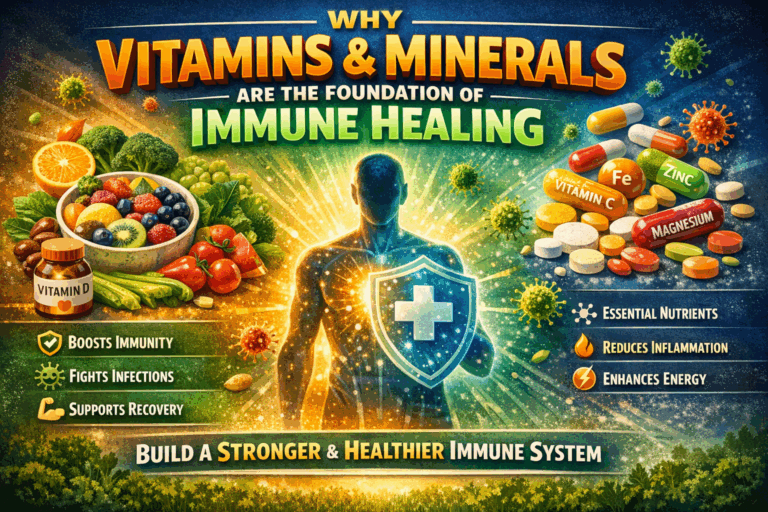
Every immune function depends on vitamins, minerals, and metabolic cofactors.
Immune cells are among the most nutrient-dependent cells in the body.
Without adequate micronutrients:
- immune signals become distorted
- Inflammation remains unresolved
- repair cycles stay incomplete
- Disease becomes chronic
This is why recovery stalls even when treatment is “working.”
Chronic Disease Creates Chronic Nutrient Depletion
Long-term illness drains nutrition faster than normal life.
Common reasons include:
- Persistent inflammation consumes antioxidants
- digestive weakness, reducing absorption
- Liver overload, impairing nutrient activation
- Stress hormones accelerate nutrient loss
- long-term medications affecting metabolism
As a result, patients often develop cellular malnutrition—even if they eat regularly.
This nutritional deficit silently blocks recovery.
Immune Nutrition: What It Really Means
Immune nutrition is not about calories or protein alone.
It refers to micronutrients that regulate immune intelligence, including:
- vitamins (A, B-complex, C, D, E, K)
- minerals (magnesium, zinc, iron, selenium, copper)
- cofactors that support enzyme systems
These nutrients:
- guide immune behavior
- regulate inflammation
- enable detoxification
- support, repair, and regeneration
Without them, immunity becomes reactive—not restorative.
Why Medicines Alone Cannot Create Long-Term Recovery
Medicines are designed to:
- block pathways
- suppress reactions
- manage symptoms
They are essential in many conditions.
But medicines do not rebuild:
- immune cell quality
- enzyme systems
- cellular energy
- immune memory
That rebuilding process requires nutrition, not pharmacology.
This is why long-term dependence on medicine often increases, while strength declines.
The Role of Immune Nutrition in Different Recovery Phases
1️⃣ Early Phase: Stabilization
Immune nutrition supports:
- energy restoration
- reduction of excessive inflammation
- better tolerance to treatment
Patients often feel less exhausted and more stable.
2️⃣ Mid Phase: Repair
Nutrients enable:
- tissue healing
- immune regulation
- detoxification pathways
This is where real recovery begins—but only if nutrition is adequate.
3️⃣ Long-Term Phase: Resilience
Proper immune nutrition helps:
- prevent relapse
- strengthen immune memory
- stabilize metabolism
- reduce dependency
This phase determines whether recovery lasts.
Digestion: The Gatekeeper of Immune Nutrition
A critical point often ignored:
Eating nutrients does not mean immune cells receive them.
Chronic disease frequently weakens:
- stomach acid production
- digestive enzyme output
- gut lining integrity
This leads to:
- poor absorption
- toxin formation
- immune confusion
That’s why immune nutrition must consider digestive strength, not just intake.
Liver Function: The Immune Metabolism Hub
The liver:
- activates vitamins
- processes minerals
- clears toxins
- regulates immune tolerance
If liver metabolism is overloaded:
- nutrients remain inactive
- toxins recirculate
- inflammation persists
Long-term recovery requires nutritional support that respects liver capacity.
Why Supplements Matter in Long-Term Recovery
In ideal conditions, food might be enough.
In chronic illness, it is not because:
- Absorption is impaired
- Demand is much higher
- reserves are depleted
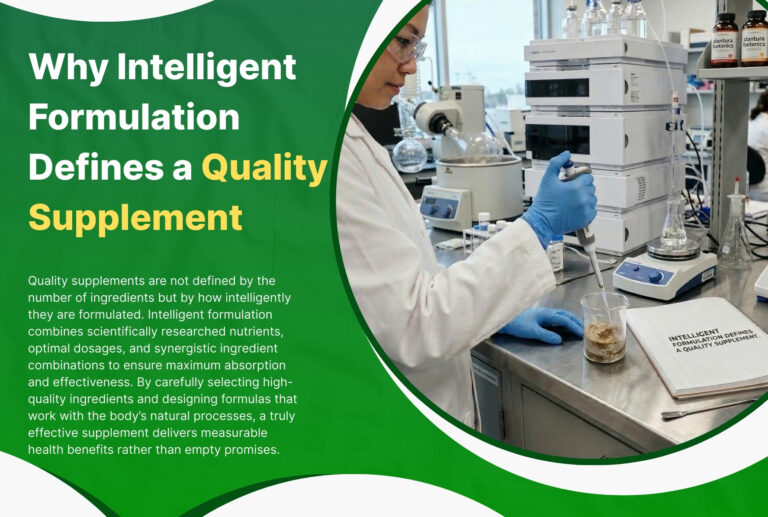
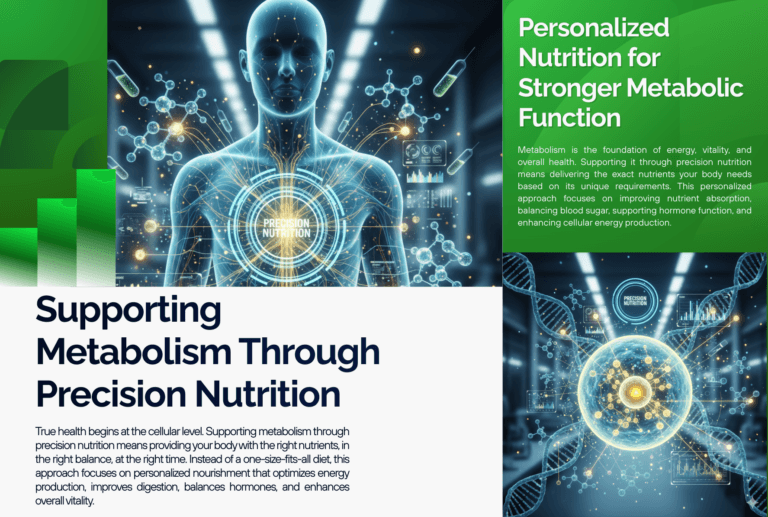
Well-designed supplements act as precision immune nutrition, providing:
- bioavailable micronutrients
- consistent dosing
- metabolic balance
This is why supplements play a central role in Natural Immunotherapy.
At Dantura Botanics, supplements are formulated to support:
- immune restoration
- cellular nutrition
- long-term safety
- sustained recovery
They are not quick fixes—they are rebuilding tools.
Signs That Immune Nutrition Is Working
Long-term recovery shows itself gradually through:
- improved energy consistency
- fewer infections or flare-ups
- better digestion and appetite
- improved sleep quality
- reduced inflammation patterns
- increased tolerance to stress
These are functional recovery markers, often appearing before lab values normalize.
Common Mistakes That Block Long-Term Recovery
❌ Focusing only on symptom control
❌ Ignoring micronutrient deficiencies
❌ Random supplement use without balance
❌ Overstimulating immunity instead of regulating it
❌ Neglecting digestion and liver health
Recovery requires coordination, not shortcuts.
The Prevention Advantage of Immune Nutrition
When immune nutrition is corrected:
- disease recurrence risk reduces
- Immune stability improves
- aging-related decline slows
- resilience increases
This makes immune nutrition not only a recovery strategy, but a prevention strategy.
Final Takeaway
Long-term disease recovery does not begin with stronger medicine.
It begins with a stronger, better-nourished immune system.
If immune cells are deficient, healing cannot be completed.
If immune nutrition is restored, recovery becomes sustainable.
That is why, in Natural Immunotherapy, immune nutrition is not optional. It is the starting point of real, lasting recovery.